Showing posts with label 2011. Show all posts

Wednesday, May 29, 2013

2011 Chevrolet Equinox Review

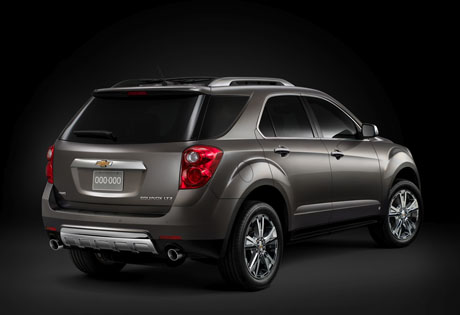
Front 3/4 view of silver 2011 Chevrolet Equinox
The 2011 Chevrolet Equinox.

The same knee-jerk that put drivers into SUVs last decade is taking a lot of them out, and in a lot of cases thats an over-reaction, too. The answer for many isnt "no SUV", its a smarter, right-sized SUV, which in most cases means a crossover.

Its been a while since weve done a review of a Chevrolet Equinox, so we borrowed one from Courtesy Chevrolet in Phoenix for a week.

Chevys done a great job of covering a wide price range with the Equinox, which is its smallest crossover. The base model (LS) starts at $22,995 in front-wheel drive. There are three trim levels up from there (1LT, 2LT and LTZ) and all four are also available in all-wheel drive.

Ours was the front-wheel drive LTZ. Base price $28,570. Thatll get you the 2.4 liter 4-cylinder ECOTEC engine with 182 horsepower hooked up to a 6-speed automatic transmission and some nice EPA fuel economy estimates: 22 city/32 highway. Also on the standard goodies list: Four wheel anti-lock disc brakes, Stabilitrak, remote keyless entry, OnStar, a rear-view camera, Ultrasonic parking assist, programmable power lifgate, heated power outside mirrors, 17-inch aluminum sheels, fog lamps, projector beam headlamps, and and exterior chrome package.

Interior shot of 2011 Chevrolet Equinox
Inside, the 2011 Chevrolet Equinox is comfortable and, in LTZ trim, loaded.
The standard equipment list for the interior is pretty long, too: Leather appointed seats with heated front buckets, 8-way power memory drivers seat and memory mirrors, sliding and reclining rear seats, automatic climate control, cargo net, cover and cross rails, tilt/telescoping steering wheel, cruise control, AM/FM/SiriusXM/CD 8-speaker Pioneer audio system, Bluetooth, outside temperature and compass, self-dimming rear view mirror and leather-wrapped steering wheel with audio controls.

Again, thats all part of the deal at $28,570. Not bad. In fact, very good. Good enough, in fact, that ours added only two options: 19-inch chrome-clad aluminum wheels ($1,250) and the 3.0 liter V6 engine ($1,500).

Rear 3/4 view of 2011 Chevrolet Equinox

About the engine...its a big step up in power...to 264 horses. Its great. But its also never going to get you anywhere near the mileage of the standard four. In fact, in 60% city street and 40% urban freeway driving, we averaged 16.5 miles per gallon (the EPA estimates 17 city/24 highway for the V6). If your driving includes mountain passes, that may be a trade worth making. If, on the other hand, youre mostly doing city-street commuting, seriously consider sticking with the ECOTEC four. 

With the V6, the Equinoxs bottom line was $32,130. Stick with the four and stick with the stock 17-inch wheels, and shed come in at $29,380.

Chevy says the Equinoxs prime competition is the Toyota RAV4, the Honda CR-V and the Ford Escape, all three well into their product cycle. The Equinox is by far the freshest of the four and should be on your  list.

Tuesday, May 21, 2013

2011 jeep patriot Wallpapers and features with price previews

2011 jeep patriot Wallpapers and features with price previews
New for 2011 Jeep Patriot outside are highlights an aggressive new front mask with standard fog lights positioned in the spotlight a new rear apron extended lower than previous models, one in body colour grille, new available 17-inch wheels, four new colors and 4 × 4 ground clearance, which was increased by 1 inch.
2011 Jeep Patriot

Tuesday, May 7, 2013

2011 Hyundai i10 facelift


Hyundai has released new details for the facelifted i10.

The facelifted i10 comes with a brace of new or revised engines: a new 1.0 three-cylinder Kappa engine replaces the 1.1 Epsilon unit, while the 1.2 is upgraded with 13% more power and 9% less CO2.
The 1.0 now averages 67.3mpg on the combined cycle.

The new Blue model is powered by the all-new 1.0-litre three-cylinder Kappa engine, which returns combined cycle fuel consumption of 4.2 litres/100km and CO2 emissions of just 99g/km.

The upgraded 1.25-litre engine is 33 percent more efficient than the unit it replaces, packing 63kW, using 4.6 litres/100km and emitting 108g/km CO2.

Inside, the cabin has been upgraded with a new instrument cluster (with an eco-shift indicator), improved seats, additional chrome accents, and a rear seat cup holder. Four trim levels are available, but all models come nicely equipped with air conditioning, a six-speaker audio system (with iPod connectivity), power windows, and central locking.


2011 Hyundai i10 facelift 2011 Hyundai i10 facelift 2011 Hyundai i10 facelift 2011 Hyundai i10 facelift 2011 Hyundai i10 facelift 2011 Hyundai i10 facelift 2011 Hyundai i10 facelift 2011 Hyundai i10 facelift


Press Release

NEW CHAPTER STARTS FOR AWARD-WINNING HYUNDAI i10

  • Comprehensively enhanced version of Hyundais best-selling city car
  • Introduction of the all-new Hyundai i10 Blue with 99 g/km CO2 emissions
  • First of a new family of ultra-efficient Blue Drive vehicles
  • New engines (1.0-litre & improved 1.2-litre) and Intelligent Stop & Go (ISG) technology
  • Cheapest five-seat car on the market to achieve sub-100g/km CO2
  • i10 Blue - Road tax and London Congestion Charge exempt
  • Still great value: priced from £8,195 with class-leading specification
Hyundai has comprehensively updated its award-winning i10 city car range. The range-wide update - which goes on sale 1st March - marks the arrival of Hyundais first sub-100g/km Blue model, along with specification and design upgrades for the rest of the line-up.

The new and improved version of Hyundais entry-point model represents a significant step forward over the outgoing i10. Chief among the changes are enhancements to the i10s design - both in the cabin and on the exterior of the car. These key design changes are in keeping with the brands bold and progressing design language, bringing a clear family resemblance between the new i10 and other recently launched Hyundais, including the sleek ix35 and ix20 models.

A new and improved range of Euro V compliant engines blend clean performance with excellent fuel economy and ultra-low emissions. The latest i10 introduces the all-new 1.0-litre ‘Kappa engine, which replaces the old 1.1-litre ‘Epsilon unit. This cutting-edge three-cylinder engine achieves a remarkable 67.3mpg combined: the sort of cheap-to-run credentials that will resonate with customers as the cost of motoring continues to rise. The popular 1.25-litre ‘Kappa engine has also been improved giving 13% more power (85bhp), 9.2% less CO2 (108g/km) and 8.7% better fuel consumption (61.4mpg) than the outgoing 1.25-litre ‘Kappa engine.

To make the most of the efficient new 1.0-litre engine, Hyundai has introduced an all-new model - the i10 Blue. This special ‘eco edition of the i10 emits an astonishingly low 99g/km CO2, so it gains exemption from VED and the London Congestion Charge. It is currently the only sub-£10k five-seater car on the market to achieve this, and the first of a family of Blue models that will underscore Hyundais commitment to environmental technology.

The revised range consists of four trim grades - Blue, Classic, Active and Style - all of which offer exceptional value for money. Equipment specification across the i10 range remains impressive, with usually optional features, such as air conditioning and the addition of an iPod plug-in, standard fit on all new i10s. As part of a class-leading equipment list, customers will also find four airbags, a six-speaker stereo, electric windows and central locking all as standard on all models. Prices start at £8,195 for the entry-level Classic model.

All new i10s come with Hyundais world-beating Five Year Triple Care package, for total peace of mind. This package includes five-year unlimited mileage warranty, five years roadside assistance and five years of vehicle health checks. Its an offer that is yet to be matched by any of Hyundais rivals.


Sunday, May 5, 2013

2011 Acura RDX

2011 Acura RDX

The Acura RDX was designed to be among the sportiest in its segment, and except for a couple issues, the driving experience of the 2011 model is engaging as with our 2007 RDX long-termer. And that long-termer didt benefit from the changes Acura made for the 2010 model year. Yes, the RDX now wears Acuras polarizing power plenum grille, but the changes are far more significant than a restyled exterior and attractive new 18-inch wheels. A rear-view camera, changes to the leather seating surfaces, more ambient lighting, and USB-port connectivity now come standard. When the RDX was introduced, it was available only with Hondas super-handling all-wheel drive. That strategy was rethought and now there the front-drive model we sampled. It boasts a cheaper entry-level price and better fuel economy with the turbocharged 2.3-liter four-cylinder engine making 240 horsepower at 6000 rpm and 260 pound-feet of torque at 4500 rpm. 

The engine is plenty powerful, and the turbo surge makes the RDX feel quicker than it really is at times. Back when we tested our long-term RDX, it sprinted from 0-60 mph at 7.0 seconds. Now that the front-wheel-drive crossover is 200 pounds lighter, expect a slightly improved time. RDX drivers will need to develop a lighter touch with the throttle or else fuel economy will suffer. The brakes, too, were improved for the refreshed RDX. Acura says the upgrades result in more feel and less grabbiness to the binders, although they still are a touch on the sensitive side. Regardless, there no arguing with revised rear brake pad actuation that translates to less drag and longer pad life.

2011 Mitsubishi Lancer


The 2011 Mitsubishi Lancer gains numerous interior and safety updates. From the inside the updated cabin gains better sound insulation as well as USB support and colour LCD display. VR, VRX and Ralliart variants also gain Bluetooth 2.0 support as a standard feature (when coupled with MMCS).
Mitsubishi says it has updated the brake assist system as well as improving the power window safety system for all MY11 models. Visually the car remains the same.
The new SX model is intended to fill the gap between the entry model ES and mid-spec variant VR. The demand for such a model has led the Japanese company to equip all SX variants with leather steering wheel with audio controls, rear spoiler and 16-inch alloy wheels (features over the ES variant).
The SX Lancer complements the current Lancer line-up and provides a variety of high quality safety and functional features, at an attractive and economical price.” MMAL’s president and CEO, Masahiko Takahashi said.
Engines remain the same across the range with Lancer SX, ES and VR variants all powered by 2.0-litre dual overhead cam MIVEC four-cylinder unit that output 113kW of power @ 6000 rpm and 198 Nm of torque at 4250 rpm.
Whats New for 2011
The 2011 Mitsubishi Lancer adds electric-assist power steering and brake regeneration to its base engine models, increasing fuel economy. Mitsubishis Fuse voice-activation system also debuts while standard features and optional packages see a minor reorganization. Also, the base model replaces the former rear disc brakes with drum brakes.

Introduction

Are you bored of humdrum economy sedans? Are you looking for a little excitement without breaking the bank? The 2011 Mitsubishi Lancer could be a remedy worth checking out. When used as directed, the Lancer can elevate your heart rate and generally enhance your mood. But its not without a few side effects.
The Lancer is offered in three varying doses, from the commonplace DE and ES base trim levels to the more potent GTS and prescription-strength Ralliart. Depending on the seriousness of your ailment, there seems to be a Lancer for every taste. Its sharp exterior styling and lively performance (in higher trim levels) are sure to have you back to your old self in no time.
The downsides, though, could give you second thoughts. The base 2.0-liter engine lacks power and, if combined with the continuously variable automatic transmission (CVT), leads to rather anemic acceleration. Stepping up to the more powerful GTS and Ralliart engines helps immensely, but an increased appetite for fuel also results. The Lancer also has a rather plain interior design and subpar interior materials.
Fortunately for the Lancer, Mitsubishi has tinkered with the 2011 formula to eliminate some of the side effects that plagued previous versions. The addition of electric-assist power steering and brake regeneration serve to increase fuel economy for the base models while the optional Fuse voice-activation feature reduces frustration when controlling phone, navigation and entertainment functions.
The Lancer isnt the only antidote for the economy sedan doldrums; the Mazda 3 and Subaru Impreza deliver similarly effective results. Both competitors are also available in varying potencies in the form of the Mazdaspeed 3 and Impreza WRX. The Impreza provides a bit more enticement with all-wheel drive for all models, while the Mazda 3 scores points with its more attractive interior. You could also check out the Kia Forte, which presents a better value proposition. In the final analysis, the 2011 Mitsubishi Lancer is a worthy habit-forming cure to the econo-sedan blahs, but we recommend trying out the alternatives first.

Body Styles, Trim Levels, and Options

The 2011 Mitsubishi Lancer is a compact sedan available in DE, ES, GTS and Ralliart trim levels (the Lancer Evolution is reviewed separately).
The base DE comes with 16-inch steel wheels, rocker-sill bodywork extensions, a tilt-only steering wheel, full power accessories, a trip computer and a four-speaker CD/MP3 stereo. The ES comes with all the aforementioned items and adds air-conditioning, cruise control, keyless entry, upgraded upholstery, a 60/40-split rear seat with a center armrest, manual driver-seat height adjustment, steering-wheel audio controls and an auxiliary audio jack for the stereo.
The GTS gains a more powerful engine, 18-inch alloy wheels, foglights, a rear spoiler, a sport-tuned suspension, keyless ignition/entry, automatic climate control, sport bucket front seats with upgraded fabric, the Fuse voice-activation system, Bluetooth and a six-speaker stereo with a USB port. The Ralliart ups the performance ante with a turbocharged engine, an automated dual-clutch manual transmission (with shift paddles) and all-wheel drive. Also included is satellite radio.
Many features listed are also available on lower trim cars as stand-alone options or as part of bundled packages. The Alloy Wheel package adds 16-inch alloy wheels to the ES trim along with rear disc brakes (instead of drums) and a rear stabilizer bar. Several cosmetic and aerodynamic enhancement options are also available for the DE and ES trims.
A Touring package is available for GTS and Ralliart trims and features xenon headlights, a sunroof, a smaller rear spoiler, rain-sensing wipers, leather seats and a nine-speaker Rockford Fosgate sound system with an in-dash six-CD changer and satellite radio. Also optional on all but the DE trim is a navigation system that features a 30GB hard drive capable of storing digital music files.

Powertrains and Performance

The 2011 Mitsubishi Lancer DE and ES are powered by a 2.0-liter four-cylinder engine that produces 148 horsepower and 146 pound-feet of torque. In California-emissions states, this engine earns Partial Zero-Emissions Vehicle (PZEV) certification but its also down on power a bit with 143 hp and 143 lb-ft of torque. The Lancer GTS upgrades to a 2.4-liter four that makes 168 hp and 167 lb-ft of torque.
A five-speed manual transmission is standard for both engines, and a CVT is optional on the ES and GTS. The GTS also includes a CVT manual mode with simulated gear ratios operated via shift paddles on the steering wheel. The Ralliart features a turbocharged 2.0-liter inline-4 that thumps out 237 hp and 253 lb-ft. Power is sent to all four wheels through an automated dual-clutch manual transmission with shift paddles.
In Edmunds testing, a GTS with a manual transmission accelerated from zero to 60 mph in 7.7 seconds, which is quick for this class. The combination of the base engine and five-speed delivers a time of 8.8 seconds to 60 mph, while the CVT can muster only a performance of 9.1 seconds. The Ralliart dispatches the 0-60 dash in a sizzling 5.8 seconds.
In terms of fuel economy, the 2.0-liter achieves an EPA-estimated 25 mpg city/33 mpg highway and 28 mpg combined with the automatic transmission, an average rating for this class of car. The 2.4-liter gets 23 city/30 highway and 26 combined with the automatic. The manual transmission delivers nearly identical fuel efficiency. The high-performance Ralliart has notably poorer fuel efficiency, with a rating of 17/25/20.

Safety

The Mitsubishi Lancer comes standard with front-seat side airbags, full-length head curtain airbags and a driver knee airbag. Antilock brakes and stability control are standard across the board, but four-wheel disc brakes are standard only on the GTS and Ralliart. The DE and ES trims get by with rear drum brakes. In recent Edmunds brake testing, a Lancer GTS stopped from 60 mph in a scant 115 feet.
In government crash testing, the Lancer received a five-star rating for driver frontal crash protection and front-seat side crash protection. It earned four stars for passenger frontal crash protection and for rear-seat side protection. In the Insurance Institute for Highway Safetys frontal-offset, side-impact and roof-strength tests, the Lancer achieved the best rating of "Good."

Interior Design and Special Features

While the 2011 Mitsubishi Lancers chiseled exterior lends an air of aggression, its interior design and materials tend to drag down the vehicles overall appeal. On the whole, the cabin design is uninspiring and rife with hard plastic elements. Taller drivers will likely bemoan the lack of a telescoping steering wheel and the lack of under-thigh support. On the other hand, the rear seats are quite comfortable, with a generous amount of legroom. These 60/40-split seats fold flat to accommodate bulky items, which is advantageous considering the Lancers rather small 11.6-cubic-foot trunk.
One item of contention from last year, the operation of the touchscreen navigation unit, looks to be remedied by Mitsubishis Fuse voice-activation system. Much like Fords Sync system, selecting a destination or your favorite music is only a voice command away. The Mitsubishi system lacks some of the Syncs functions and commands, but we still prefer it to the tricky touchscreen layout in any case.

Driving Impressions

With a decent amount of comfort and a quiet cabin, a 2011 Mitsubishi Lancer equipped with the base 2.0-liter engine is fine for the daily commute. Unfortunately, this engine seems to also generate more noise than horsepower, especially when saddled with the CVT. For those seeking a bit more excitement on a budget, the GTS is a better alternative thanks to more low-end engine power and a suspension that responds better to spirited driving.
The Ralliart bridges the gap to the high-performance Lancer Evolution model with turbocharged power, sharp handling and rapid-fire gearchanges from the dual-clutch transmission. Mechanically, the Ralliart provides plenty of thrills in the curves, but in our testing weve found its tires to be a bit too economy-minded considering the cars strong performance potential.
Tuesday, April 30, 2013

2011 Ferrari 599 Owners Manual

2011 Ferrari 599 Owners Manual - What are you leaving to download is here. But lets translate the canvass of it foremost so you gift getmore collection nigh it. Before downloading, it give be such alter if you see the inspect of 2011 Ferrari 599 Owners Manual.

This periods Ferrari 599 room exclusive two individuals, defines only 11 mpg in the townspeople, has a dinky footgear and is trapped with sadly behind­-the-times in-car gadgets. Positive -- learn yourself for this one -- theres not flatbottom a cupholder. And with that we watch the practicality-minded concern of our customer substance method. If you management some any of the above, the Ferrari 599 clearly isnt the foremost way to clothe your $300,000.

If, still, the above flows equal a film of "blahs" upon "yada yadas," then youll be spellbound to bonk that the 599 continues to be the epitome of the Ferrari publication. It begins with the engine. Be it in GTB Fiorano gloss or the new-for-2011 GTO, the 599s 6.0-liter V12 soothe blares its way to an 8,400 rpm redline with an envigorating yell that must be observed in all its astonishment to be completely valued. The speed that comes with that yell blows you into your set with a suited quantity of aggression.

Around sides, the 599s unusual managing belies its near-2-ton curb bodyweight. Achievement success for this impressive knowledge goes to the original revocation with its Magna Journey inducement dampers that complement up in milliseconds in reaction to agonistical cornering, yet suitability off for unagitated street impermanent. Its this dual-natured efficiency thats a bit upset, as Ferraris individual just ever been regarded degage enough for a superior jaunt (thats what an Aston Actress or Bentley is for).


2011 Ferrari 599 Owners Manual here